






Local curriculum. Local educators. Global standards.

Ostathi instructor working on laptop

Recognised by Governments, Institutions, and Global Media

Ostathi and UniHouse are recognised by the UK Government, featured globally across international media, and supported by leading technology institutions

For learners

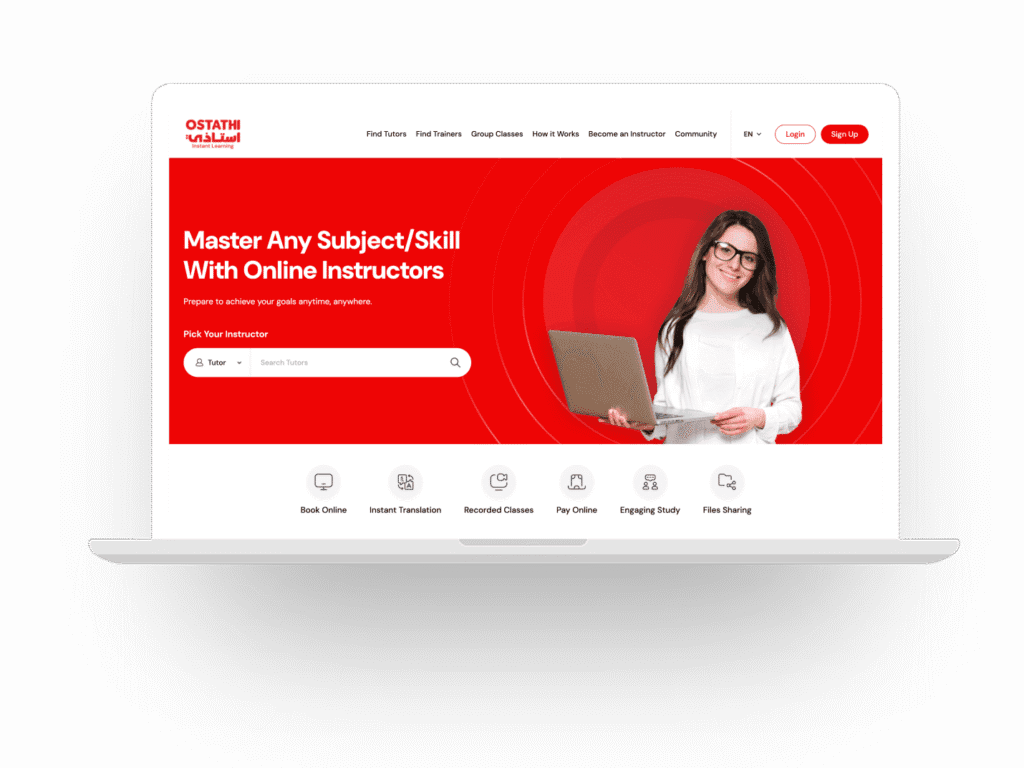
Find tutors who teach your national curriculum, and trainers who understand the regional context your career operates in. Live one-to-one sessions, recorded lessons between sessions, and a virtual classroom for shared materials. Whether you’re a student preparing for an exam, or a professional learning a skill that needs local context to be useful — Ostathi tutors are screened against what they actually teach.

For instructors

Build a teaching practice that uses what you actually know — the curriculum you’ve taught, the market you understand, the language you teach in. Ostathi is for local subject specialists with regional expertise. Set your own schedule, manage bookings and secure payments in one place, and reach learners in markets you couldn’t reach alone. No upfront cost.

Built around local context, not imported from elsewhere

Ostathi operates a South-South knowledge transfer model. Each country platform is designed around the cultural, institutional, and labour market reality of its operating context — built with local educators, aligned to local curricula. The platform a learner uses in Amman is built differently from the one used elsewhere.

Live in Jordan. Expanding globally.

Ostathi’s first country platform is operational in Jordan, deployed under the World Bank Youth, Technology and Jobs programme with the Ministry of Digital Economy and Entrepreneurship (MoDEE). Over 1,000 applications were received in the first five days of outreach. Additional country platforms are in development.

More localized platforms are coming soon across the globe.

The Ostathi Model: Turning Learning into Livelihoods and Human Capital into Growth

Ostathi is more than a platform — it is a national growth ecosystem.Built on six core pillars and driven by two catalysts for growth, it is powered by digital inclusion and local innovation.
The model connects learning to earning, bridges skills gaps, and supports workforce development. Where EdTech meets FinTech, it aligns people, technology, and financial access to build resilient prosperity

Latest insights

Analysis on digital workforce activation, structured capacity development, and education reform across emerging markets.

income verification digital economy

How to Verify Freelance Income in the Digital Economy: The Case for Platform-Based Evidence

Self-reported data has long been the Achilles heel of workforce development programmes. A beneficiary completes training, reports that they are now employed, and the programme records a successful outcome....

Read More
gig economy payment Middle East

Payment Barriers in the Middle East Gig Economy — And How Ostathi Solves Them

The MENA region has one of the world’s fastest-growing populations of digital-ready youth. According...

gig economy emerging markets

Gig Economy Frameworks for Emerging Markets: Why Structure Is the Missing Link

The global gig economy is growing. According to the World Bank, digital platform work...

UniHouse WEE™ eight-stage implementation pathway — from outreach to verified income, showing three phases: Mobilise, Build, and Activate, with CDEF measurement and digital infrastructure layers

What Is the WEE™ Framework? The 8-Stage Pathway from Skills to Verified Income

Across emerging and frontier markets, workforce development programmes face a persistent structural failure: training...